
Powering the Clean Energy Transition
From Quartz to Solar Panels: How High-Purity Quartz Powers the Clean Energy Transition
As the global economy accelerates toward decarbonization, solar energy is becoming one of the most important pillars of the future energy mix. According to the International Energy Agency (IEA), solar photovoltaic (PV) energy could account for nearly 50% of the world’s total electricity production by 2050 in order to achieve global net-zero targets.
Behind every solar panel lies a critical raw material that often goes unnoticed: high-purity quartz (HPQ).
PAL Quartz’s Crête White Property in Québec is strategically positioned within this rapidly growing value chain, supplying the foundational material required to manufacture advanced solar technologies.
The Solar Energy Product Chain
Begins with Quartz
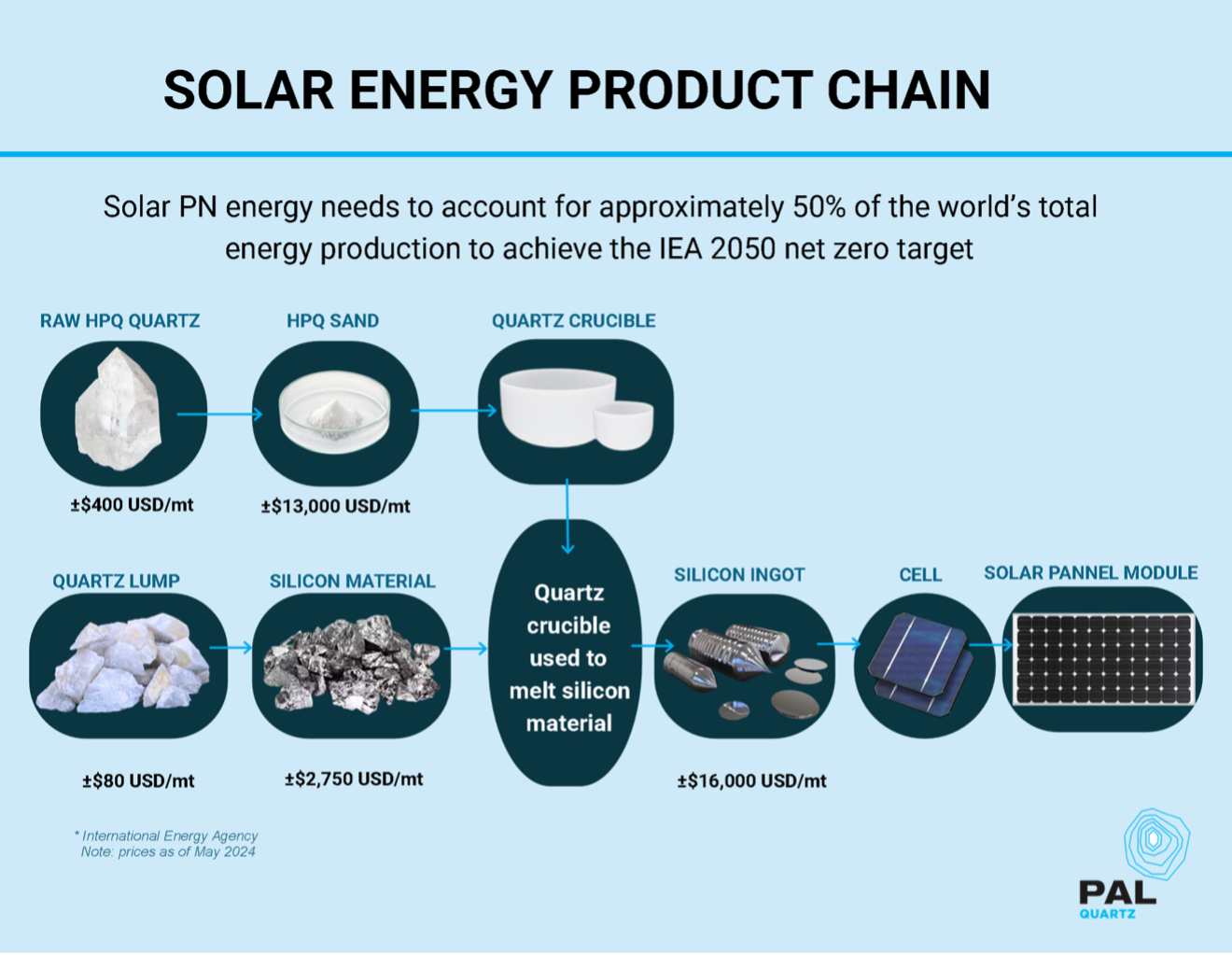
The process of producing solar panels starts long before the assembly of photovoltaic modules. It begins with the extraction and processing of high-purity quartz — a specialized silica material with extremely low impurity levels.
The graphic illustrates the transformation process from raw quartz material into solar energy components:
1. Raw HPQ Quartz
High-purity quartz extracted from deposits such as Crête White serves as the starting point of the value chain.
Approximate value:
± $400 USD/mt
This raw quartz material must possess exceptional purity and consistency to qualify for advanced industrial applications.
2. HPQ Sand
The quartz is processed into refined HPQ sand used for highly specialized applications.
Approximate value:
± $13,000 USD/mt
At this stage, the value of the material increases significantly due to purification and processing requirements.
3. Quartz Crucibles
HPQ sand is transformed into quartz crucibles — specialized containers capable of withstanding the extreme temperatures required for silicon production.
These crucibles are essential to the manufacturing of monocrystalline silicon ingots used in semiconductors and solar technologies. Without them, modern chip and photovoltaic manufacturing would not be possible.
4. Silicon Material
Quartz lump material is processed into silicon metal, a key component in renewable energy and electronics manufacturing.
Approximate value:
± $2,750 USD/mt
Silicon metal serves as the building block for semiconductors, batteries, solar cells, telecommunications, and AI infrastructure.
5. Silicon Ingots
Using quartz crucibles, silicon material is melted and formed into ultra-pure silicon ingots.
Approximate value:
± $16,000 USD/mt
These ingots are sliced into wafers used to manufacture photovoltaic cells and advanced semiconductors.
6. Solar Cells and Solar Panel Modules
The wafers are converted into solar cells and assembled into solar panel modules that generate renewable electricity worldwide.
This final stage represents the culmination of a highly sophisticated supply chain — one that begins with access to quality high-purity quartz deposits.
A Global Supply Chain
Built Around a Single Deposit
One of the most critical realities of the HPQ market is the extreme concentration of supply.
Today, an estimated 70% of the world’s high-purity quartz used in semiconductor and solar applications originates from a single mining district: Spruce Pine, North Carolina.
The quartz extracted from Spruce Pine is considered unique because of its exceptional purity and its suitability for producing quartz crucibles used in the Czochralski process — the dominant method used to manufacture silicon wafers for semiconductors and solar cells.
This concentration has created what many analysts now describe as a major global supply chain vulnerability or “single point of failure.”
Hurricane Helene Exposed
the Fragility of the Market
The risks associated with this supply concentration became highly visible during Hurricane Helene in 2024.
The hurricane brought catastrophic flooding, infrastructure damage, road closures, and widespread power outages to the Spruce Pine region, temporarily forcing operations to shut down.
Although the disruption lasted only a matter of weeks before operations gradually resumed, the event triggered immediate concern across the global semiconductor and solar industries because so much of the world’s HPQ supply depends on this one location.
The incident demonstrated how vulnerable advanced manufacturing supply chains have become:
Semiconductors
Solar panels
AI infrastructure
Data centers
Consumer electronics
Electric vehicles
all rely, directly or indirectly, on ultra-high-purity quartz materials sourced from a very limited number of deposits worldwide.
As demand for clean technologies continues to accelerate, the industry is increasingly seeking alternative and secure sources of HPQ outside of this concentrated supply chain.
Why New HPQ Deposits Matter
Deposits capable of producing ultra-high-purity quartz suitable for advanced technologies are exceptionally rare globally.
This scarcity is driving increased strategic interest in developing new North American HPQ projects capable of supporting:
Energy security
Semiconductor resilience
Domestic manufacturing
Clean technology supply chains
Reduced geopolitical and logistical risk
In this context, projects such as PAL Quartz’s Crête White Property may become increasingly important as industries look to diversify and strengthen long-term supply stability.
The PAL Quartz Opportunity
PAL Quartz’s Crête White Property benefits from several strategic advantages:
Accessible infrastructure in Québec’s North Shore region
Favorable geological exposure
Potential high-purity quartz characteristics
Access to renewable hydroelectric power
Proximity to North American and international markets
As the clean energy transition accelerates and concerns around supply chain resilience grow, high-purity quartz is emerging as one of the critical materials underpinning the future of technology and renewable energy.
The future of solar energy may begin with sunlight — but it also begins with quartz.